

Chemical Industry Transforms, Contributing to Economic Growth(1)
The Vietnamese chemical industry, which was established and has developed since the 1950s, has undergone a positive "transformation," contributing significantly to economic growth. The types and structures of chemical products are becoming increasingly diverse. Chemicals are now present in most areas of social life. The chemical industry has created many effective products and solutions, playing an increasingly important role in the industrial and economic development of every nation. As life becomes more developed and civilized, the role and position of chemicals become even more vital.
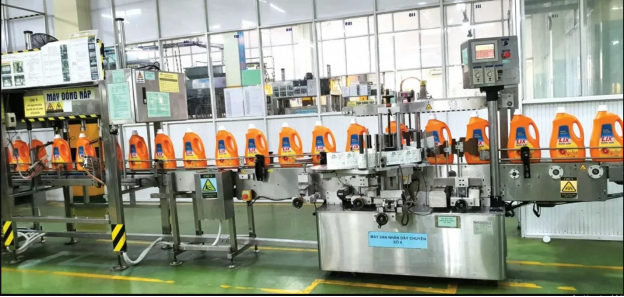
The Vietnamese chemical industry was formed and developed from the 1950s.
Global analysis by Oxford Economics shows that the chemical industry is the fifth-largest manufacturing sector globally in terms of its direct annual contribution to GDP, accounting for 8.3% of the total economic value of the global manufacturing sector. The chemical industry contributed an estimated $5.7$ trillion USD to world GDP, equivalent to 7% of the world's total GDP in 2017, and supported 120 million jobs. It is estimated that for every 1 USD generated by the chemical industry, an additional 4.20 USD is generated in other sectors of the global economy.
In Vietnam, the domestic chemical industry was established and has developed since the 1950s, beginning with fertilizer and consumer chemical factories in the North with assistance from the Soviet Union and China to provide fertilizers and certain types of chemicals for consumer use. Right from its formative stage, the Party and State introduced guidelines and policies to encourage the development of the chemical industry. Thanks to this, over the past years, alongside the nation's industrialization and modernization, Vietnam's chemical industry has made remarkable strides.
Product types and structures have become increasingly diverse, basically meeting domestic demand in several sectors such as fertilizers, plant protection drugs, tires, conventional paints, detergent products, and providing input materials for many other industries. Particularly, since the Law on Chemicals took effect in 2007, the chemical industry has experienced robust growth. It has established research organizations, production and business facilities across various sectors, and has initially formed several petrochemical industrial complexes as well as concentrated industrial zones and clusters attracting numerous chemical enterprises.
The chemical industry has maintained a stable growth rate over the years, averaging 10 - 11% per year. Domestically produced chemical products have become more diverse in variety, with improved quality that is gradually approaching regional standards. Some sectors have basically met domestic demand and are heading toward export, such as fertilizers, plant protection drugs, tires, conventional paints, detergent products, and the explosive precursor ammonium nitrate ($\text{NH}_4\text{NO}_3$). Most chemical projects in recent years utilize advanced technologies that approach regional and global levels, while safety and environmental standards have been significantly elevated.
In recognition of the industry's contributions, on August 19, 2013, the Prime Minister issued Decision No. 1948/QD-TTg regarding the traditional day of the Vietnamese chemical industry , designated August 19 annually as the "Traditional Day of the Vietnamese Chemical Industry".
Currently, the overall Vietnamese chemical industry is divided into 10 main sub-sectors, including: Petrochemicals; basic chemicals (including consumer chemicals, pure chemicals, etc.); fertilizers; petrochemicals; rubber products, paint - printing ink, industrial gases; electrochemical power sources (batteries, accumulators); plant protection chemicals; detergent products, and several other chemicals.
However, within the overall picture of Vietnam's chemical industry, certain shortcomings remain. The industry primarily supplies conventional products, has not yet produced chemicals with high technical requirements, lacks high-value-added products, and still relies heavily on imports for many types of raw materials and chemical products. There are still many small-scale, outdated facilities that have not focused on scientific research or technological innovation, resulting in low product competitiveness. Instances of pollution and safety hazards still occur, leading to hesitation and a lack of welcome from some local authorities and residential communities.
To be continued.
Source:Vietnam Trade And Industry Magazine (Bao Cong Thuong)