Chemical Industry Transforms, Contributing to Economic Growth(2)
Overall, Vietnam's chemical industry is divided into 10 main sub-sectors.
To help the chemical industry better meet domestic and export demands , the Prime Minister issued Decision 726/QD-TTg in 2022, approving the Development Strategy for Vietnam's Chemical Industry to 2030, with a vision to 2040.
The strategy sets the target that by 2030, a chemical industry with a relatively complete structure will be built, encompassing the production of both means of production and means of consumption to serve many other industries ; it will better satisfy domestic demand and boost exports. Priority will be given to developing key sub-sectors such as basic chemicals, petrochemicals, technical rubber, pharmaceutical chemicals, and fertilizers. Along with this, value chains will be formed, allowing deep participation in the production networks of the Vietnamese and regional industries.
Resources must be used rationally and economically; advanced technology, the digital economy, and digital transformation will be applied to increase added value, enhance the industry's competitiveness, and promote capital accumulation among economic groups operating in the chemical sector. Productive forces will be rationally distributed by sector and territory, forming and effectively utilizing concentrated industrial zones, clusters, and large-scale chemical production complexes.
By 2040, Vietnam's chemical industry is envisioned to develop with the majority of its sub-sectors utilizing advanced technologies, producing international-standard product quality, participating deeply in global value chains, using energy economically and efficiently, and competing fairly in international integration. It will feature a professional, disciplined, and highly productive workforce ; initially take initiative in research, design, manufacturing, and master production technologies for several high-quality products ; and leverage internal strength to contribute to a sovereign, independent Vietnamese economy.
Specific targets include striving for an average industrial growth rate of 10 - 11% per year for the chemical industry, with its proportion relative to the entire industrial sector reaching about 4 - 5% by 2030. For the period leading up to 2040, the average industrial growth rate of the chemical industry is targeted at 7 - 8% per year, maintaining a steady proportion of about 4 - 5% relative to the entire industrial sector.
Within this, the product groups of petrochemicals, pharmaceutical chemicals, technical rubber, and basic chemicals aim for a growth rate of 10 - 12% per year during the 2021 - 2030 period , and an average of 8 - 11% per year during the 2031 - 2040 period. The product groups of fertilizers, plant protection chemicals, electrochemical power sources, detergent products, industrial gases, tires, and paint - printing ink aim for 3 - 5% per year during the 2021 - 2030 period, and an average of 4 - 6% per year during the 2031 - 2040 period.
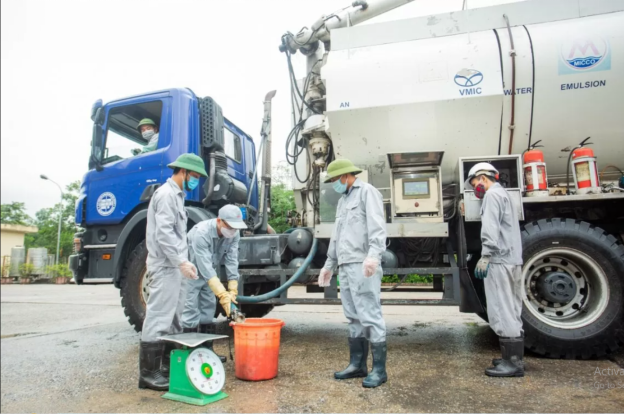
The goal is to meet a portion of the domestic demand for basic organic chemical products by 2040.
By 2030, the industry aims to maintain its capacity to meet domestic demand for urea, phosphate, and NPK fertilizers, plant protection drugs, tires, industrial gases, conventional paint - printing ink, detergents, and conventional batteries, while expanding export markets. It will partially meet domestic demand for ammonium sulfate fertilizers. The average domestic demand satisfaction capacity will be raised to 40% for petrochemical products, 30% for plant protection active ingredients, 70% for basic chemicals, 40% for technical rubber, and 75% for accumulators.
By 2040, the industry aims to partially meet domestic demand for organic basic chemical products, specialty paints, and high-tech batteries - accumulators. The average domestic demand satisfaction capacity will be raised to 60% for petrochemical products, 50% for plant protection active ingredients, 80% for basic chemicals, 50% for technical rubber, and 80% for accumulators.
The strategy strives for an average export growth rate of 9 - 11% per year during the 2021 - 2030 period, and an average growth of 7.5 - 9% per year during the 2030 - 2040 period. It aims to balance the trade balance during the 2021 - 2030 period, progressing toward maintaining a sustainable trade surplus during the 2030 - 2040 period , and targeting healthy, rational trade balances with partners to ensure long-term sustainable growth.
To achieve the above goals, the Strategy puts forward various solutions, including breakthrough solution groups, such as: Forming concentrated chemical industrial zones and logistics centers. This involves researching and encouraging investment to form concentrated chemical industrial complexes and logistics centers to attract chemical manufacturing projects and projects that utilize chemicals for production in other industrial fields. These will be located in areas with sufficiently large land funds, far from residential areas, near deep-water ports, and convenient for transport connectivity ; they will feature complete infrastructure serving production and services, ensuring safety, environmental protection, and sustainable development requirements.
The strategy also involves researching and proposing the addition of infrastructure investment projects for concentrated chemical industrial zones, as well as investment projects within these zones, into the list of sectors eligible for investment incentives, alongside building specific incentive mechanisms for these projects. Investment promotion activities will be carried out to call for investment in industrial zone infrastructure and projects within concentrated chemical industrial zones.
Additionally, the institutional management of investment activities in the chemical industry will be reformed by ensuring investment incentive mechanisms for petrochemical, pharmaceutical chemical, basic chemical, and rubber projects in accordance with the law. Favorable conditions will be created for priority projects to access incentive regimes regarding taxation, land, and labor.
Regulations on requirements for chemical projects will be amended and supplemented to ensure alignment with the industry development strategy, as well as local and regional development strategies and master plans ; chemical safety and environmental protection requirements ; advanced technology application requirements ; rational resource and raw material utilization ensuring economical and efficient energy use ; and the application of green chemistry criteria.
The coordination mechanism in investment management within the chemical sector will be strengthened. Provincial-level authorities approving investment policies need to consult the Ministry of Industry and Trade regarding the alignment of investment projects in the chemical sector with the industry's Development Strategy. Equality among economic sectors will be established, particularly focusing on further enhancing the role of the private economic sector through the effective enforcement of property rights protection and equal access to resources. A database on investment projects in the chemical sector will be built, applying digital technology to improve operational efficiency, create market competitive advantages, and ensure the sustainability of chemical industry activities...
Source:Vietnam Trade And Industry Magazine (Bao Cong Thuong)